How to Check Your AC Refrigerant Leak Signs
Low refrigerant is one of the most misdiagnosed AC problems in Greenville TX. Here are the signs to check, what they mean, and when to call a pro.
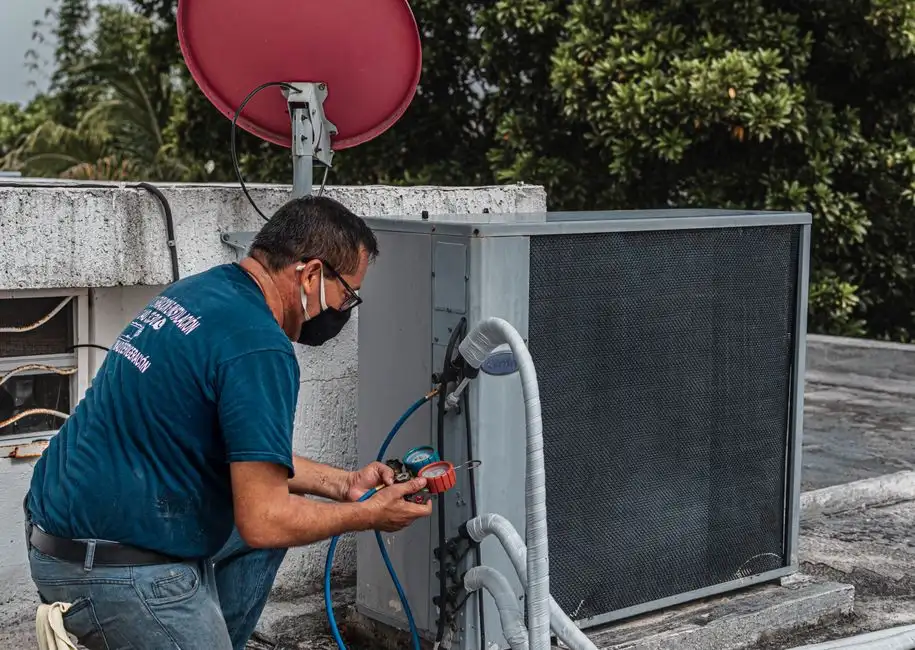
The fastest way to check for an AC refrigerant leak is to look for three things at once: oil residue around the copper line connections at the outdoor unit, ice forming on the large suction line, and a house that runs 10 to 15 degrees warmer than the thermostat setting. If you find any of those, you almost certainly have a leak - refrigerant does not get "used up" like gas in a car, so a low charge means it escaped somewhere.
We are Greenville CoolCraft, and we handle AC Repair Greenville TX calls every week where the homeowner was told they just needed a "top-off." That is not how sealed systems work. Below we walk through the real signs, how to check them safely, and what a proper leak diagnosis looks like in 2026.
What a Refrigerant Leak Actually Does to Your AC
An AC refrigerant leak is a breach in the sealed copper or aluminum circuit that carries R-410A or R-32 between your indoor evaporator coil and outdoor condenser, and it lets the charge slowly escape into the air.
Your system is designed to hold that charge for the life of the equipment. It does not consume refrigerant to cool your house the way a furnace consumes natural gas. When the charge drops, the compressor has to work harder to move the same amount of heat, which is why you see higher electric bills before you see a full breakdown.
Most leaks start at one of four places:
- Flare fittings at the outdoor unit, where vibration slowly loosens the connection
- Schrader valves, the small service ports a technician hooks gauges to
- Evaporator coil tubing, especially on units 8 years and older where formicary corrosion eats pinholes in the copper
- Line set rub-through, where copper vibrates against a joist or cabinet edge for years
A slow leak of 1 to 2 ounces per year is common on older coils. A fast leak can dump a full 6 to 8 pound charge in a single cooling season.
The 7 Most Common Signs of an AC Refrigerant Leak
These are the signs we find most often on refrigerant leak calls across Greenville, ranked roughly by how early they show up.
1. Ice on the copper line or the indoor coil
This is the number one tell. When refrigerant pressure drops, the coil temperature falls below 32 degrees and condensation freezes on it. You will see white frost on the big insulated line running into the air handler, or a solid block of ice behind the filter grille. Turn the system off - running it frozen can slug the compressor with liquid refrigerant and kill it.
2. The house never reaches the set temperature
If your thermostat says 72 and the house sits at 80 after four hours of runtime, low charge is on the short list. This overlaps with AC running but not cooling Greenville TX symptoms, so a technician needs to check pressures before assuming anything.
3. Warm air from the vents
Not cool air - warm. When the charge gets low enough, the evaporator coil cannot absorb heat, and the air coming out of the registers feels like a fan blowing room-temperature air. That is a different problem from AC blowing warm air Greenville TX caused by a bad capacitor, and the fix is different.
4. Oil residue or dark staining at line connections
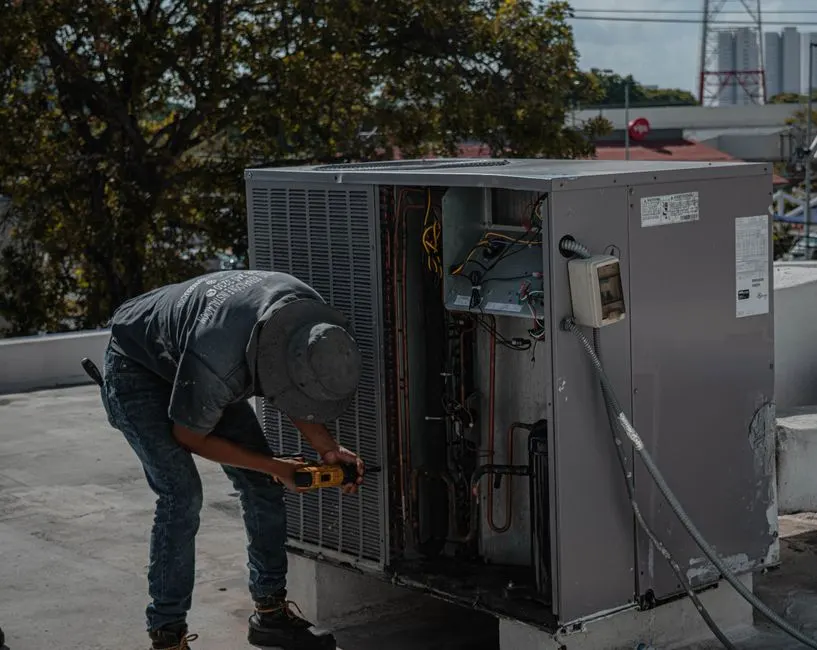
Refrigerant oil travels with the refrigerant. Where refrigerant escapes, a thin film of oil stays behind and collects dust. Wipe the brass flare fittings at the outdoor unit with a white rag. A brownish or oily smudge is a strong leak indicator.
5. Hissing or bubbling at the outdoor unit
A larger leak makes an audible hiss at the service valves, or a faint bubbling sound inside the evaporator cabinet. This is one of the AC making strange noises Greenville TX complaints that actually points straight to a refrigerant issue rather than a fan bearing.
6. Electric bill jumps 15 to 30 percent with no other change
Longer compressor runtimes burn more kWh. If your August bill in Greenville went from $180 to $240 and nothing else changed, low refrigerant is a real possibility.
7. Short cycling - the system clicks on and off every few minutes
Low pressure can trip the low-pressure safety switch, shutting the compressor down, then restarting it when pressure equalizes. If your unit is doing this, see our page on AC short cycling repair Greenville TX - the cause is not always refrigerant, but it is on the list.
How Do You Check for an AC Refrigerant Leak Yourself?
You can safely check for the visual and performance signs of a leak without touching the sealed system. You cannot legally add refrigerant or open the circuit yourself - that requires EPA Section 608 certification.
Here is the safe homeowner checklist:
- Turn the system off at the thermostat and let it sit for 30 minutes so any ice melts.
- Check the filter. A clogged filter causes freezing too, and it is free to rule out.
- Look at the large insulated copper line entering the indoor unit. Frost or ice means low charge or restricted airflow.
- Wipe the outdoor flare fittings with a clean white rag. Oil or grit means a leak.
- Listen at the outdoor unit for hissing at the service valves.
- Compare supply and return air. A working system delivers air 16 to 22 degrees cooler than the return. If the split is under 12 degrees, something is wrong.
- Log your runtimes. If the system runs more than 20 minutes past reaching setpoint, note it.
What you should not do: buy a can of refrigerant from a big-box store and add it through the service port. Those cans almost always contain sealant that gums up the metering device and the compressor, and they do not fix the leak. We have replaced more than a few compressors because of them.
If you are in an older home - say a 1970s build near the downtown square - the copper line set may be original and prone to pinhole leaks. Our team handles AC repair for older homes Greenville TX with that in mind and pressure-tests the whole circuit, not just the coil.
Why Refrigerant Leaks Get Worse in Greenville Summers
Greenville sits in Hunt County, where July and August routinely push 98 to 103 degrees and the system runs 14 to 18 hours a day. That runtime is what turns a slow winter leak into a summer failure.
A system that leaked 2 ounces a month from November through March lost maybe 10 ounces. The same leak rate from June through September loses 8 ounces a month because the compressor is running constantly and the pressure differential across the leak point is higher.
We also see more leaks in homes with long attic line sets - anything over 50 feet - because the copper has more joints and more vibration points. If your air handler is in a 140-degree attic, the insulation on the suction line breaks down faster, and exposed copper corrodes.
If you are in one of the older neighborhoods close to the courthouse, our AC Repair in Downtown Greenville crews see this constantly - 1950s pier-and-beam houses with retrofitted central air and line sets that were never properly supported.
What to Watch Out For
Three mistakes cost Greenville homeowners the most money on refrigerant leak calls.
Paying for a "top-off" without a leak search. Adding refrigerant to a leaking system is a temporary fix. It will leak out again, usually within one to two seasons, and you will pay the same diagnostic fee twice. Any honest technician should pressure-test and locate the leak before quoting a recharge.
Ignoring a frozen coil for weeks. Running a system with a frozen evaporator starves the compressor of oil return. Compressor replacement runs $1,400 to $2,400 in 2026 pricing for a typical 3-ton unit - far more than a $350 to $900 leak repair.
Assuming the leak is in the coil. About 40 percent of the leaks we find are at flare fittings and Schrader ports, which are a $150 to $300 fix. The coil is not always the culprit.
One more: if your system uses R-22 and you have a leak, that refrigerant is no longer produced in the U.S. and now runs $150 to $250 per pound when you can find it. A leak on an R-22 system is often the trigger to look at AC replacement Greenville TX rather than chase a repair.
When to Call a Professional
Call a licensed HVAC technician the moment you confirm ice on the coil, oil at the fittings, or a temperature split under 12 degrees. Those are not DIY fixes - they require EPA-certified handling of refrigerant and electronic leak detection equipment.
Our technicians use nitrogen pressure testing, electronic sniffers, and UV dye to pinpoint the exact leak location before we quote anything. We find it, we fix it, we pressure-test the repair, and we weigh in the correct charge by subcooling and superheat - not by guessing from a gauge. If you are not sure whether your symptoms point to a leak or something else, our AC maintenance Greenville TX visit includes a full pressure check and coil inspection that will tell you.
Frequently Asked Questions
How much does AC refrigerant leak repair cost in Greenville TX?
Most residential leak repairs in Greenville run $350 to $900 in 2026, including the leak search, the repair, and a recharge. Coil replacements push the top of that range. A simple Schrader valve or flare fitting fix often lands near $200 to $350.
Can I just add refrigerant instead of fixing the leak?
No. Adding refrigerant without repairing the leak is a temporary patch that will fail within one to two cooling seasons. Federal law also prohibits knowingly venting refrigerant, and most cans sold to consumers contain sealants that damage the compressor.
How long does it take to find an AC refrigerant leak?
A standard leak search takes 1 to 2 hours. Hard-to-find leaks in the evaporator coil or a buried line set can take 3 to 4 hours with nitrogen pressure testing and UV dye. We tell you upfront which scenario you are in.
Does a refrigerant leak mean I need a new AC unit?
Not usually. If the leak is at a fitting, valve, or accessible line, a repair makes sense. If the evaporator coil is leaking and the unit is over 12 years old, or if it uses R-22, replacement is often the better financial call.
Will homeowners insurance cover an AC refrigerant leak?
Rarely. Standard homeowners policies cover sudden damage from a covered peril, not mechanical failure or gradual leaks. Some policies cover the water damage if a frozen coil later causes an overflow, but not the refrigerant repair itself.
Get Help With AC Repair in Greenville
If you have ice on the coil, oil at the fittings, or a house that will not cool below 80, we can find the leak and fix it today. Greenville CoolCraft serves all of Hunt County with upfront pricing and same-day diagnostics.
Call us at (903) 304-5500 to schedule your AC refrigerant leak repair.